

HARNESS WIRING TRAILER
This Wiring Kit is for the WWII Trailer manufactured by Bantam. This kit is braided as was the original Bantam BRT Wiring. Connector required for this kit: 1 x 3 Wire and is included in the kit.
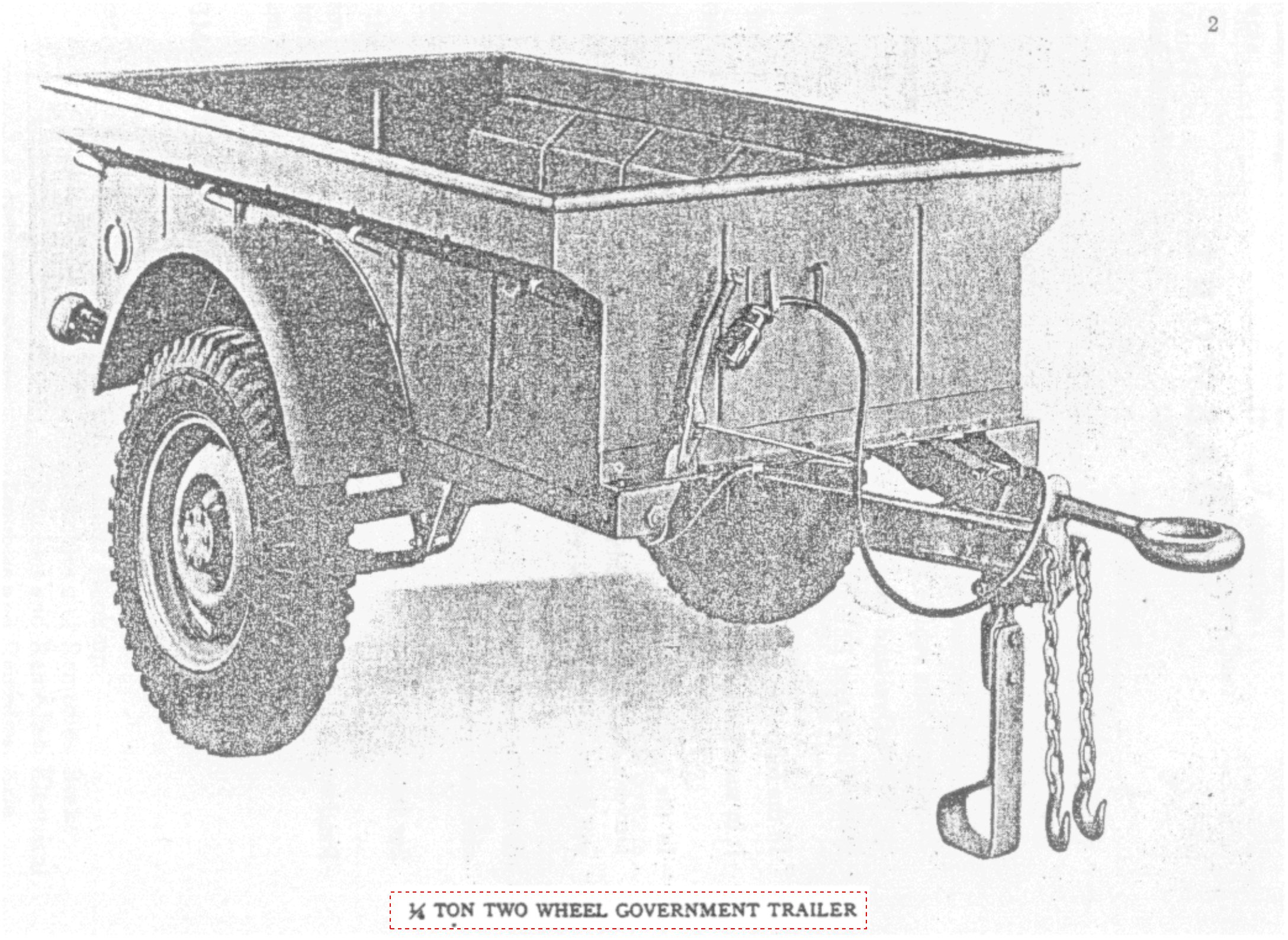
Wiring harness trailer 1/4 ton
For WWII military 1/4-ton trailers
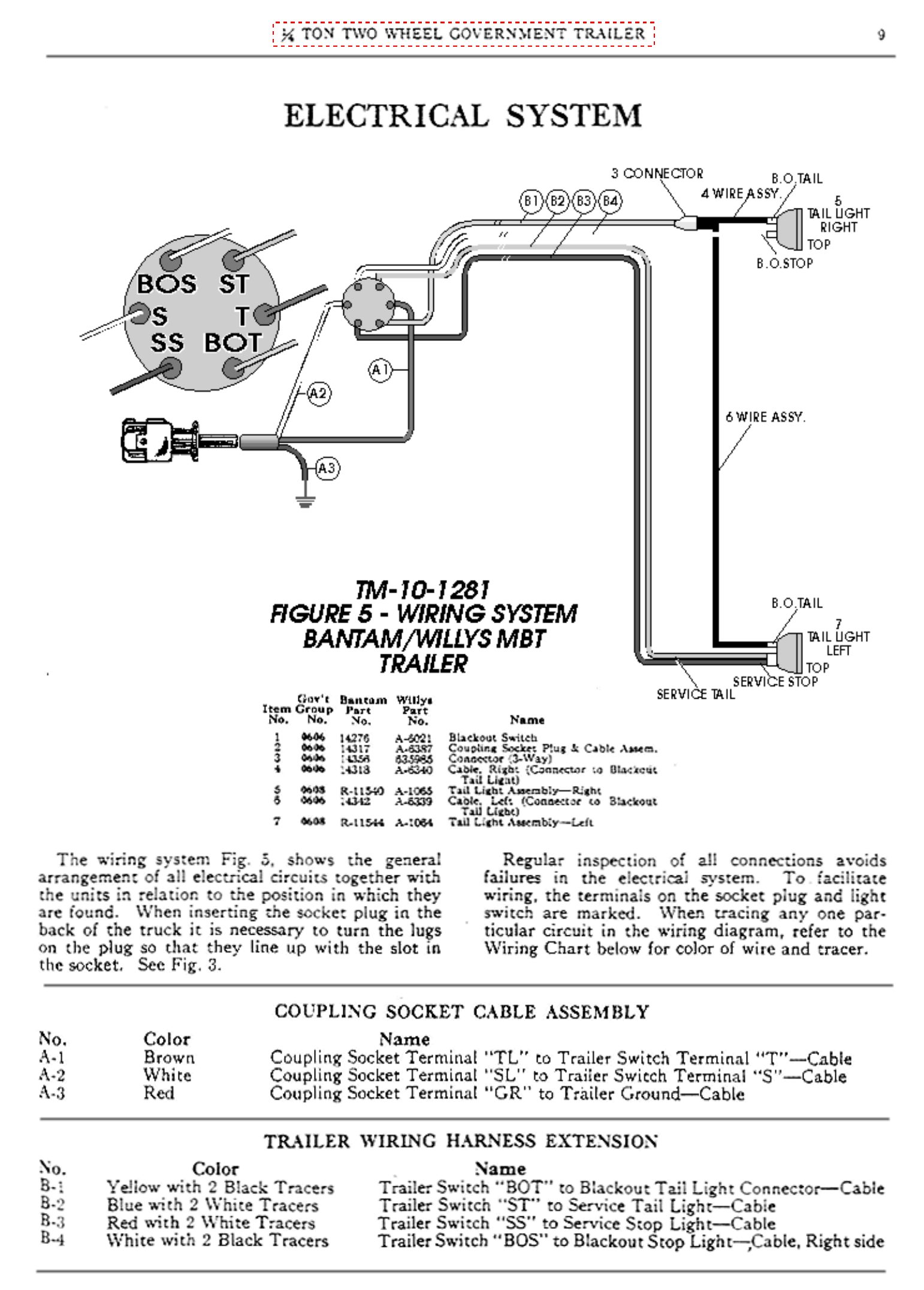
Complete electrical wiring harness for WWII 1/4-ton military trailers such as the Bantam T3 and Willys MBT. This harness connects the trailer's tail lights and brake lights to the towing vehicle via the standard 3-pin WWII plug. Suitable for 6V electrical systems.
|
Application 1/4-ton military trailers |
Voltage 6 Volt |
|
Connector 3-pin WWII plug |
Wiring type With braided protection |
Features
- Complete wiring harness for WWII trailer
- 6V electrical system, negative earth
- 3-pin WWII connector (A1, A2, A3)
- Braided wire sheath for protection
- Suitable for tail light, brake light and earth connection
★ Reproduction to original WWII specifications for military 1/4-ton trailers. High-quality finish for reliable electrical connection.
Application
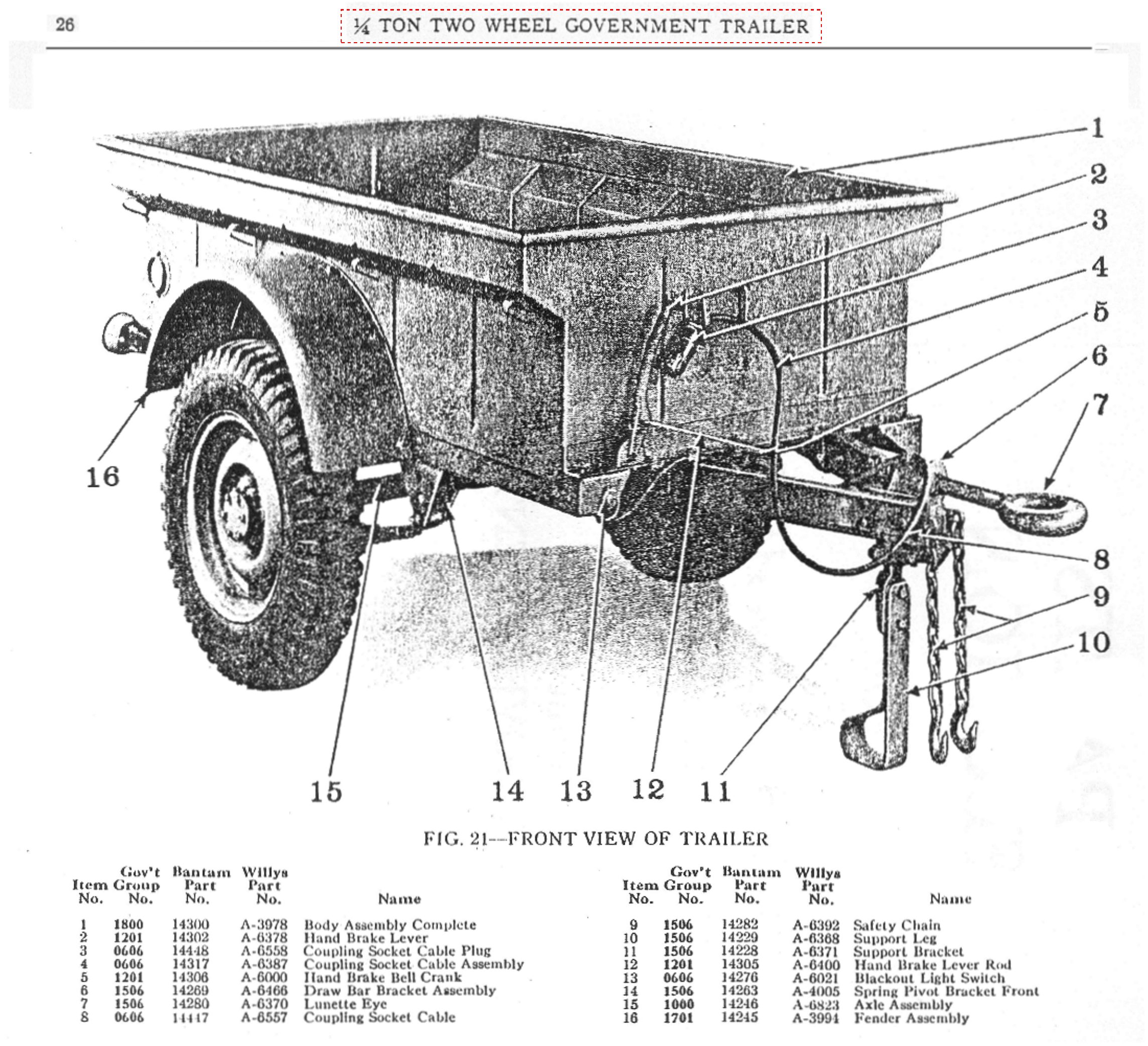
This wiring harness is designed for WWII 1/4-ton military trailers, notably the Bantam T3 (approx. 000 produced) and Willys MBT (approx. 000 produced). These trailers were towed behind Willys MB and Ford GPW jeeps during WWII. The 3-pin WWII connector system (plug A-6558) provides connections for tail light, brake light (stop) and earth (ground), but no indicators — that was not standard in WWII.
Installation notes
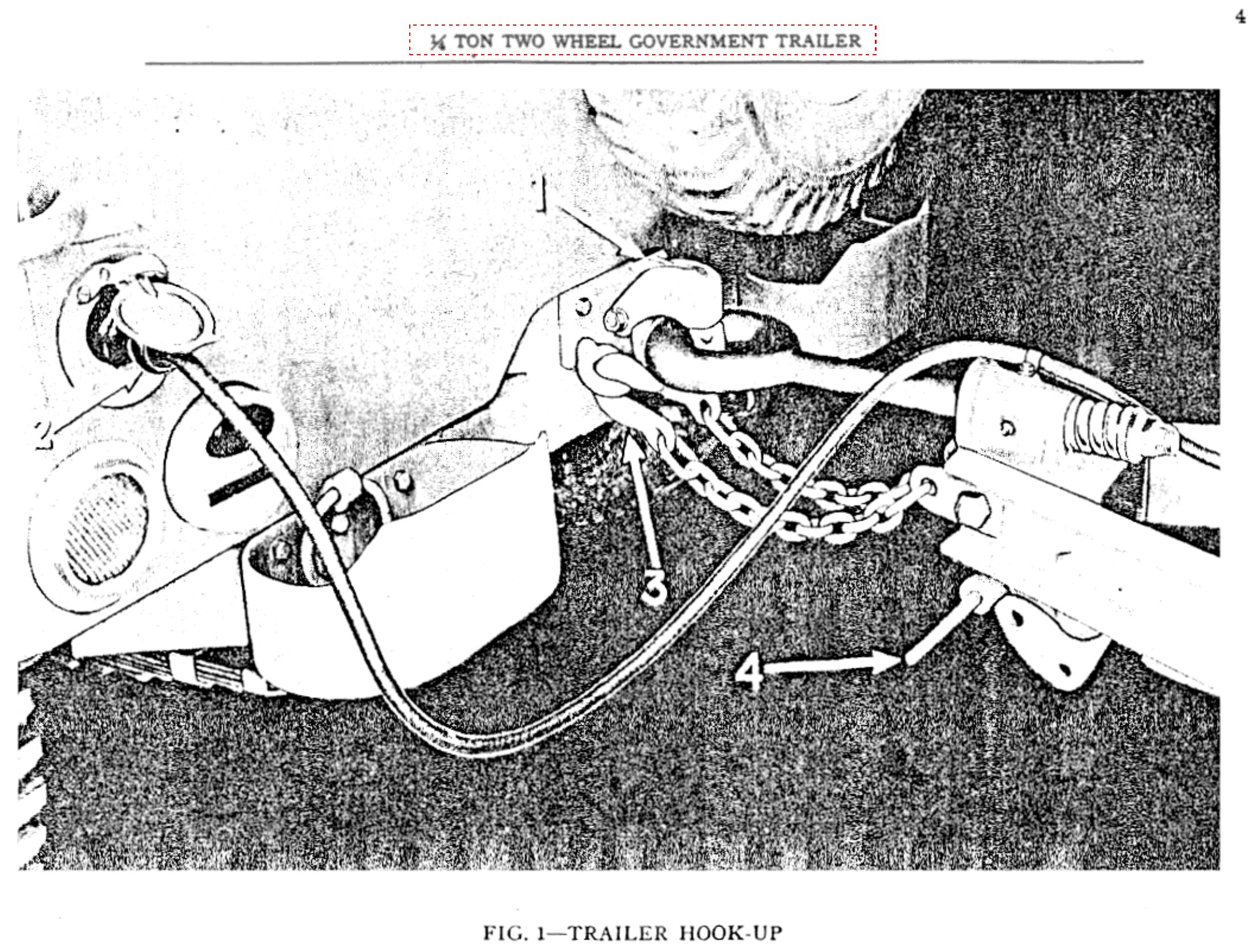
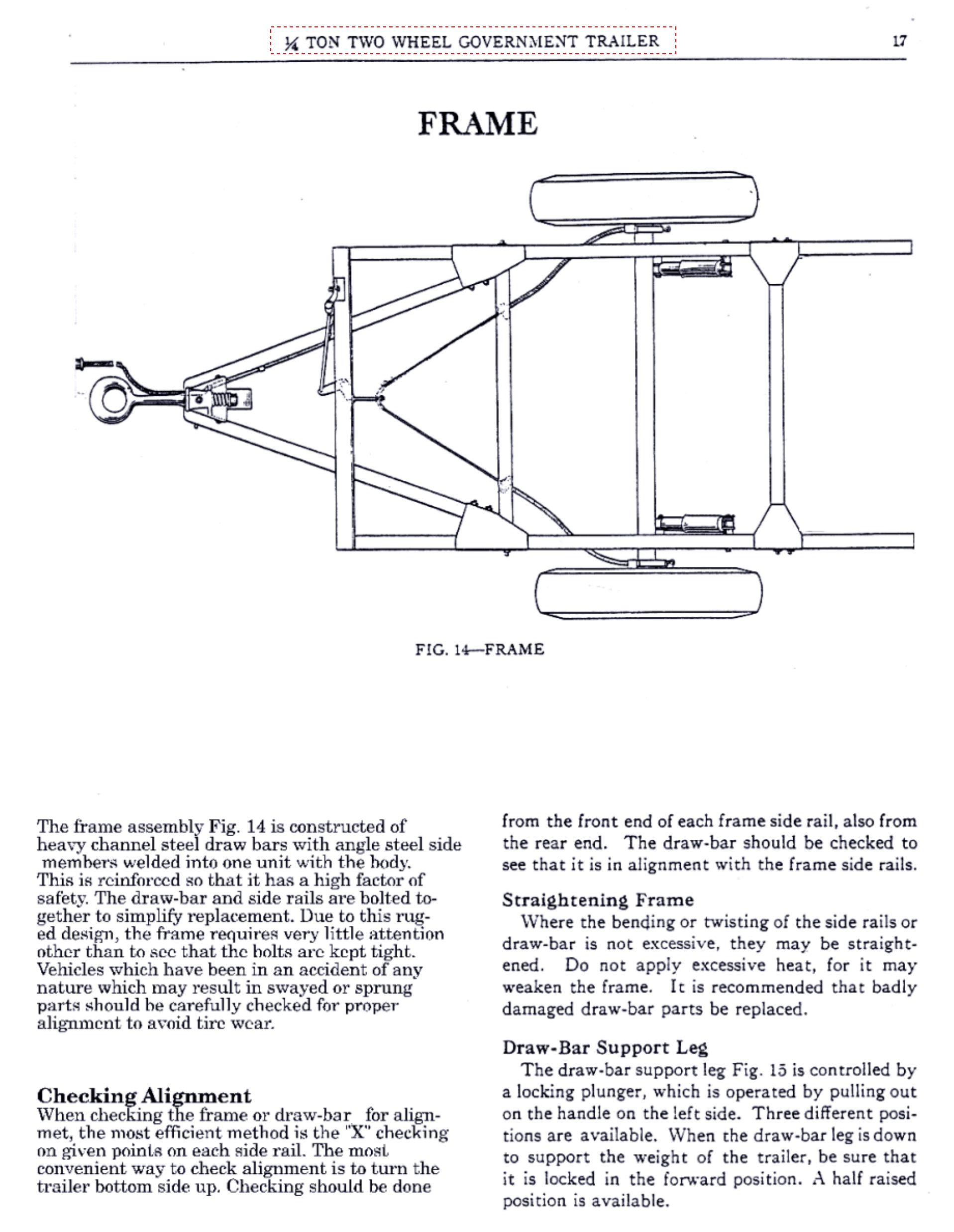
The wiring harness is secured along the trailer frame with clips and grommets. Ensure correct routing to prevent pinching or chafing. Connect to the 3-pin WWII receptacle at the front of the trailer. Note: the WWII 3-pin connector has NO provision for separate left/right indicators — only a single common brake light connection.
Compatibility
Specific to WWII 1/4-ton trailers with 6V electrical system and 3-pin WWII connector. NOT compatible with later M100/M416 trailers which use 24V Douglas connectors. The M100 (1950s, 24V) and M416 (Vietnam-era) had a different electrical system with multiple Douglas connectors for more complex lighting.
Historical context
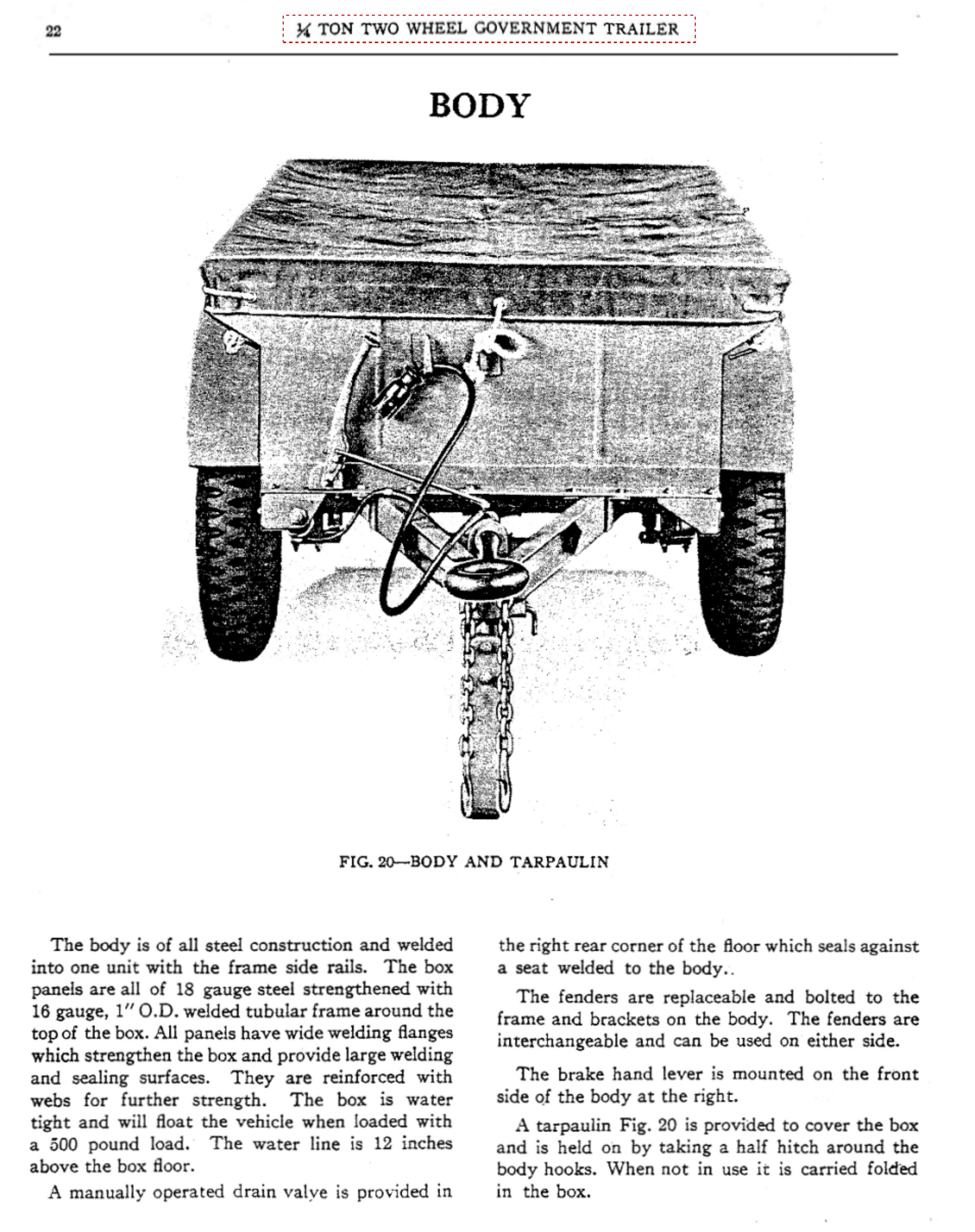
During WWII, over 150,000 1/4-ton trailers were produced by various manufacturers to transport vital supplies behind the Willys MB and Ford GPW jeeps. These amphibious trailers could even float with their 500-pound load and were designed for the harshest conditions on all fronts.
This description was generated automatically. Unsure about fitment? Contact us at info@willys.be.
This part is intended for the restoration of historic military vehicles. Fitting, aligning, deburring or reworking is part of that work and is inherent to the nature of these goods. Dimensional variation also exists between original vehicles.
Installation requires technical knowledge of the vehicle. Unsure whether this part suits your version? Ask us before purchase at info@willys.be.
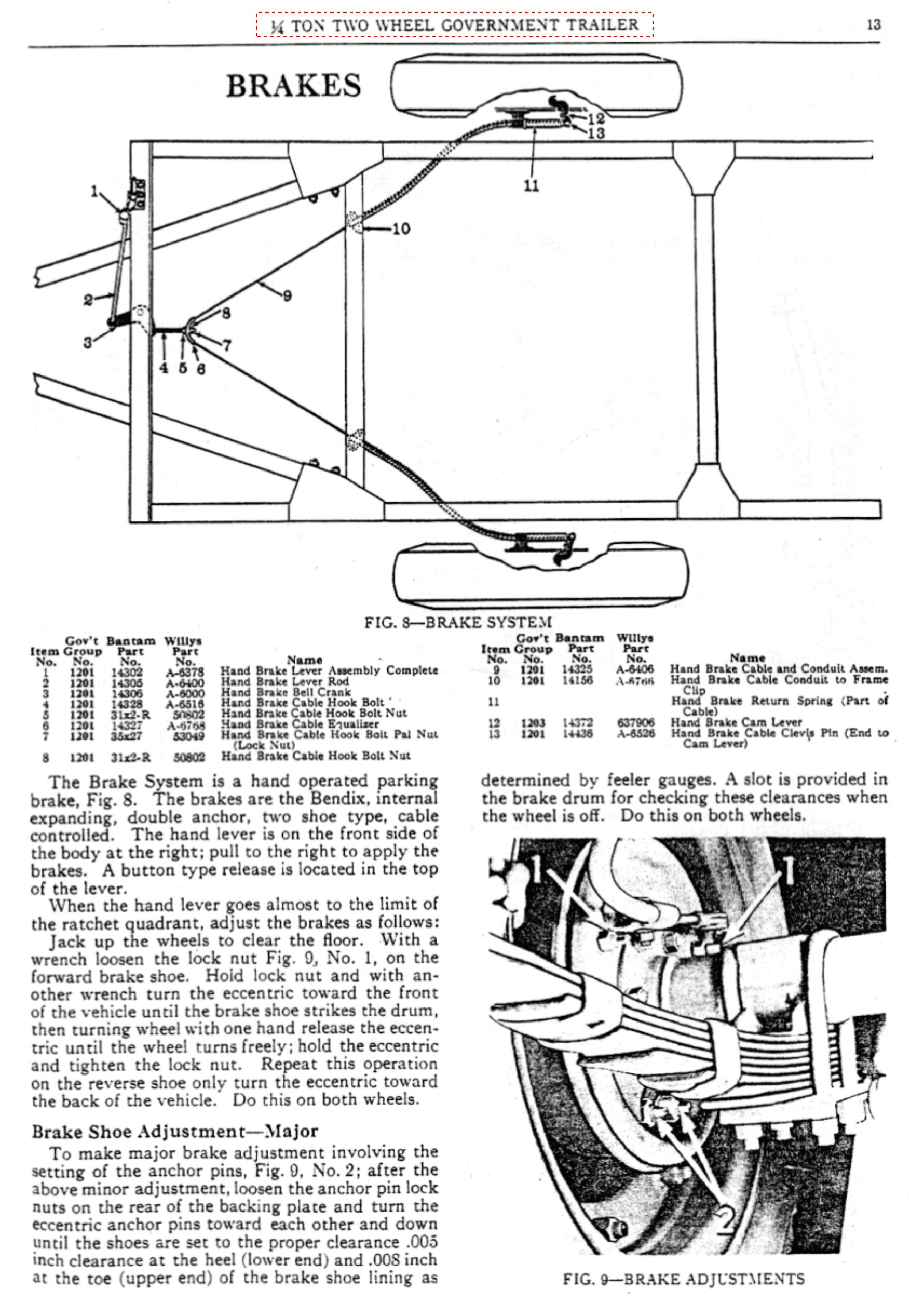
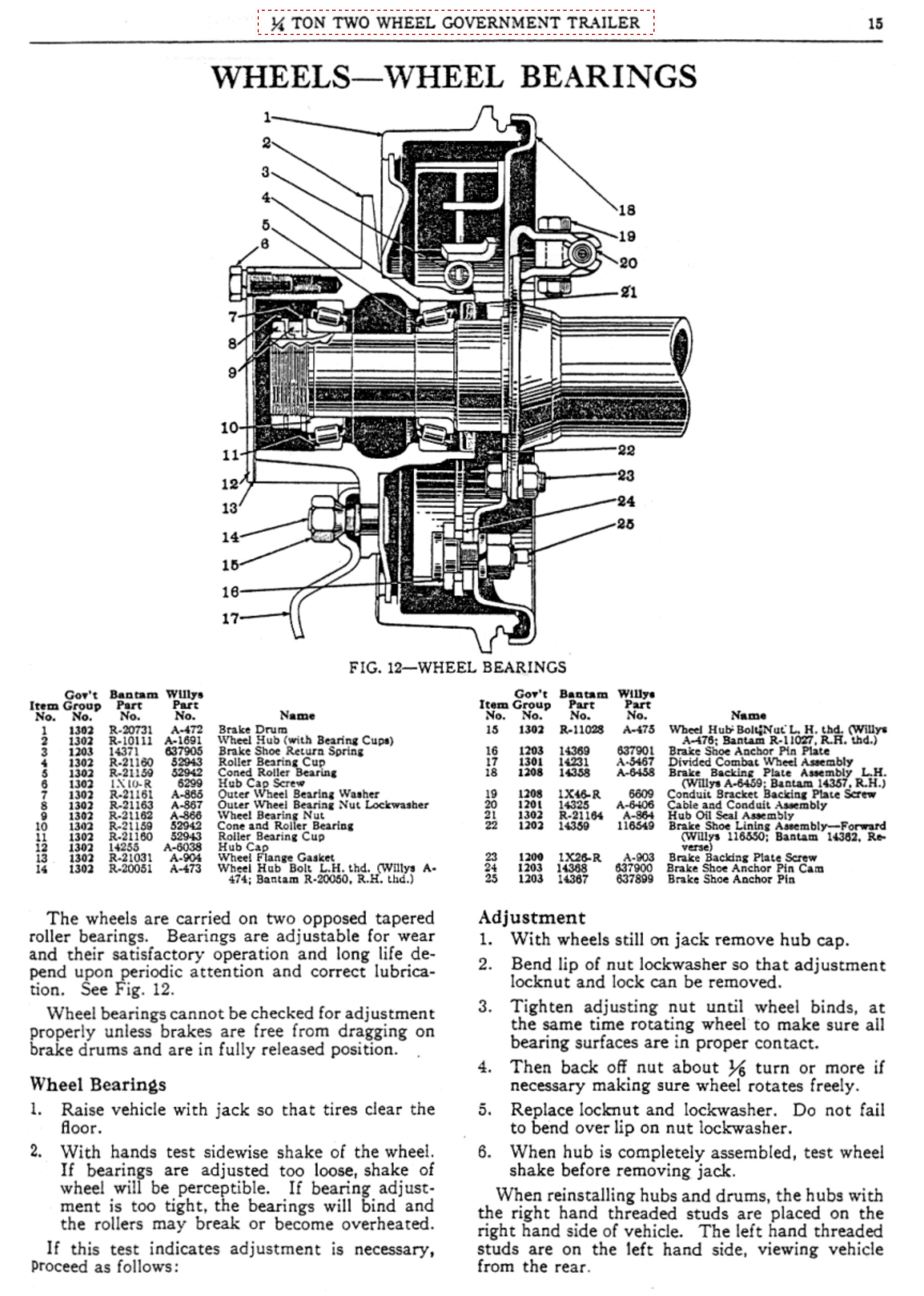
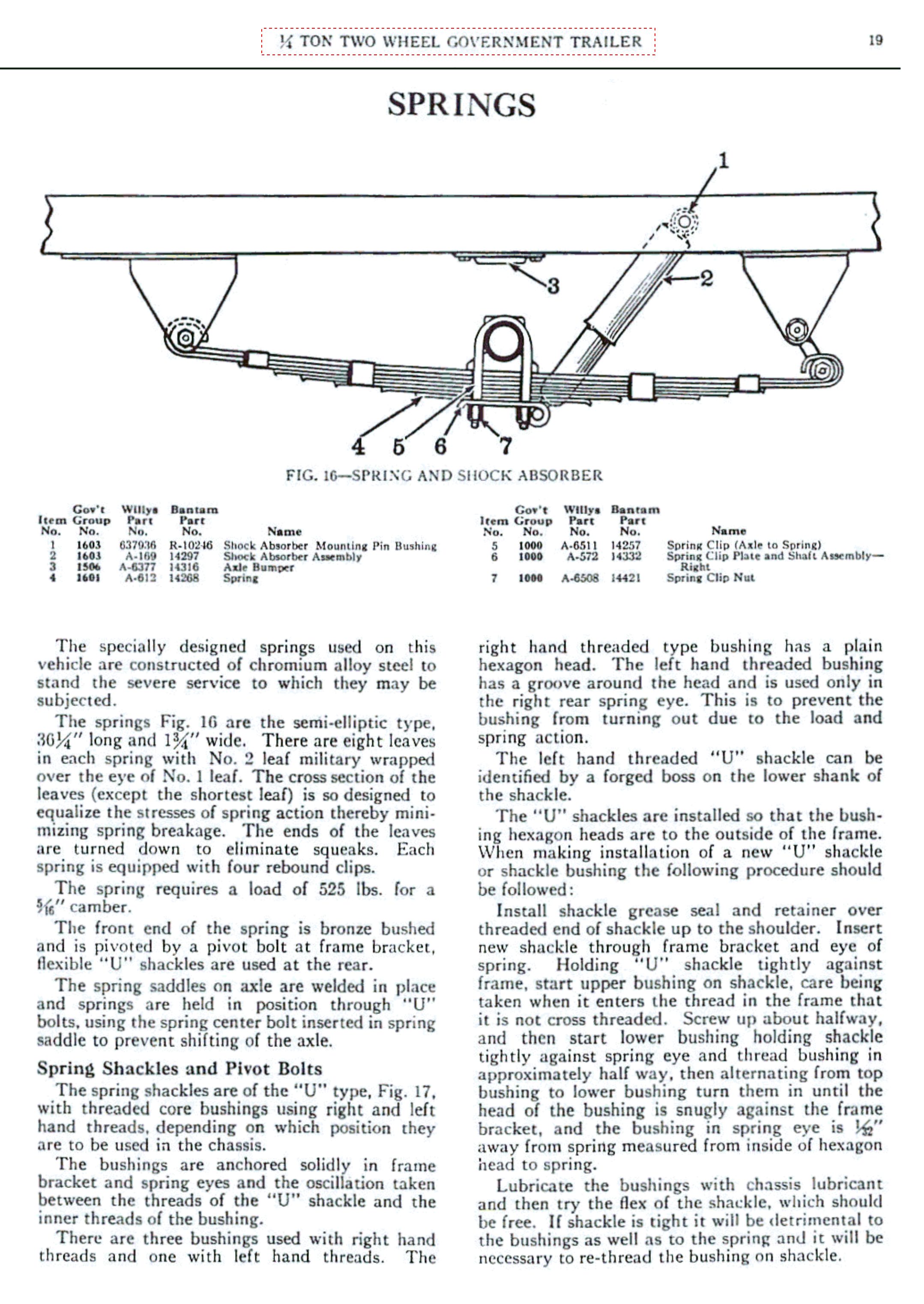
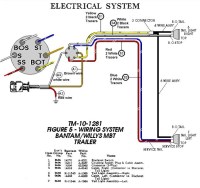
📐 Diagrams & technical drawings
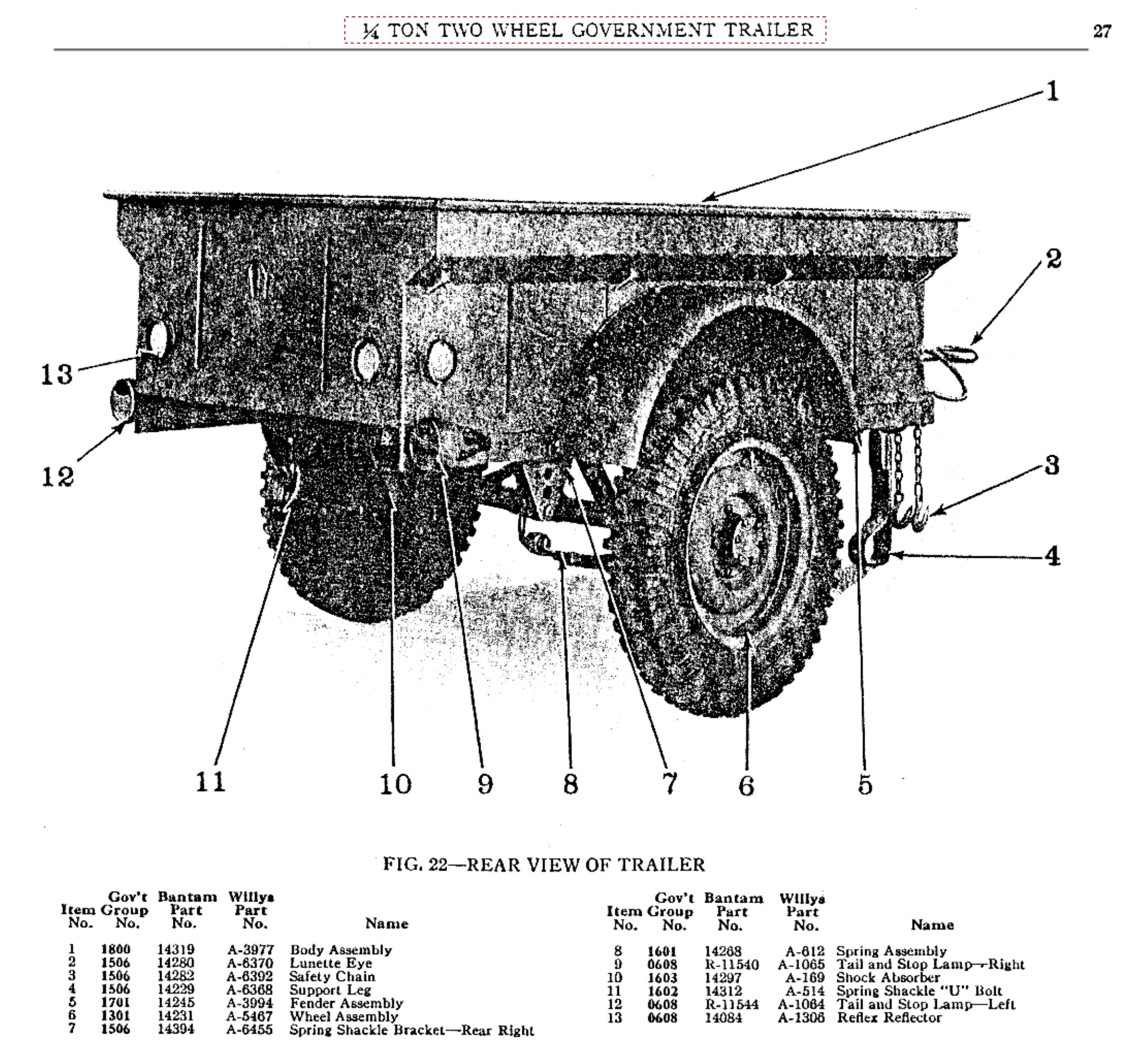
From the original Technical Manual TM 10-1281 — Parts List & Maintenance Manual — only for the 1/4-ton 2-wheel trailer (Bantam T3 / Willys MB-T)