




WIRE CUTTER FIELD MODIFICATION ON BUMPER
Wire cutter field modification on bumper
Anti-decapitation device
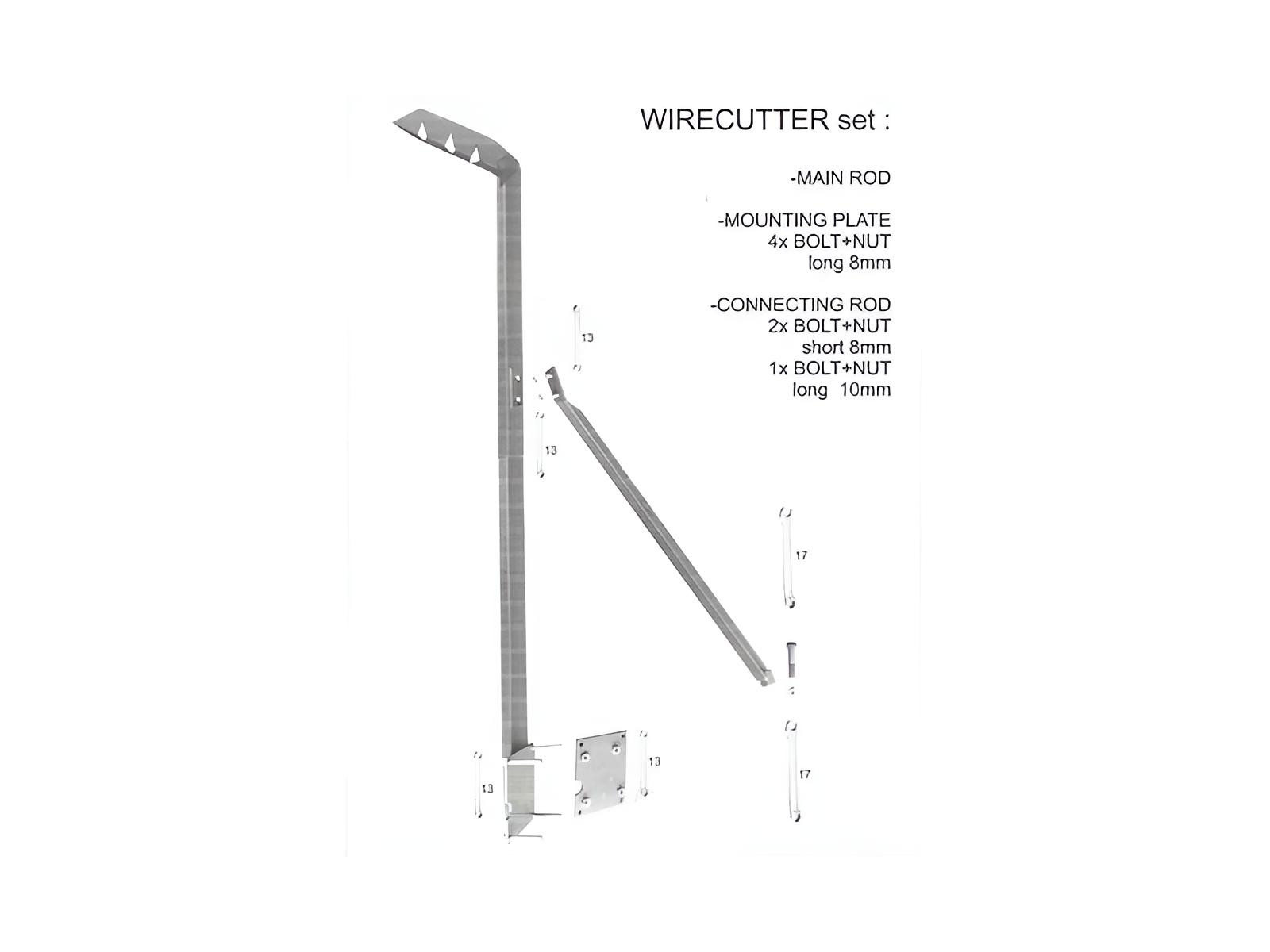
Field modification wire cutter as deployed during WWII to protect occupants of open vehicles against wires stretched across roads. This device was fitted in the field from 1943 onwards by military units, particularly cavalry and reconnaissance units operating with the windscreen folded down.
|
Type Field modification |
Mounting On front bumper |
|
Function Anti-decapitation protection |
Period WWII 1943-1945 |
Features
- Vertical steel bar mounted on front bumper
- Extends above occupants' heads
- Catches taut wires and cuts them
- No standard model — field modification from available materials
- Typically made from angle iron, T-section or pipe
★ Authentic field modification as applied by Allied units in Europe during WWII. Particularly used in Normandy, Italy and France where the enemy stretched wire traps across roads.
Application
This device was primarily applied by cavalry and reconnaissance units advancing with the windscreen folded down. First recorded use in Tunisia (1943), extensively applied in Italy (1943-1945) and especially necessary in France from D-Day (1944). Soldiers used available materials: angle iron, German barbed wire posts from the beaches, T-sections or pipes.
Installation notes
Mounting was done in various ways depending on available materials and preferences: welded to the bumper, bolted through existing mounting holes, or secured with clamps. Typically extending 60-75 cm above the windscreen. Support bracket often connected to the central grille mounting bolt. Note: device extends high — easily forgotten during work.
Compatibility
This field modification was applied to all open military vehicles where the crew drove with the windscreen folded down. No standard model — each unit improvised with available materials. Mounting varies per execution.
Historical context
German troops from 1943 onwards stretched taut wires across roads as traps against occupants of open vehicles. As a countermeasure, Allied soldiers developed this wire cutter in the field. Materials varied from angle iron to German barbed wire posts found on the beaches of Normandy.
This description was generated automatically. Unsure about fitment? Contact us at info@willys.be.
This part is intended for the restoration of historic military vehicles. Fitting, aligning, deburring or reworking is part of that work and is inherent to the nature of these goods. Dimensional variation also exists between original vehicles.
Installation requires technical knowledge of the vehicle. Unsure whether this part suits your version? Ask us before purchase at info@willys.be.
This part fits:
| Model | Years |
|---|---|
| Military jeeps | |
| Willys MB (early) | 1941, 1942 |
| Willys MB | 1942, 1943, 1944, 1945 |
| Ford GPW (early) | 1942 |
| Ford GPW | 1942, 1943, 1944, 1945 |
| Hotchkiss M201 (early) | 1956, 1957, 1958, 1959 |
| Hotchkiss M201 | 1956, 1957, 1958, 1959, 1960, 1961, 1962, 1963, 1964, 1965, 1966 |
📐 Diagrams & technical drawings
From the original Technical Manual TM 10-1513 — Maintenance Manual — only for Willys MB / Ford GPW (1942)
